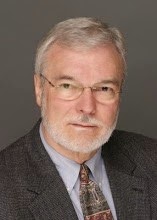
Wednesday morning -- with my Massachusetts hangover -- I co-taught the first class of a seminar on "Introduction to Psychoanalysis" for graduate students at Emory. It's a small class and informal in discussion.
As we were winding up, someone tossed off a comment like ". . . regardless of what Rush Limbaugh says."
A young student, who comes from India, asked: "Who's Rush Limbaugh?"
Almost as a chorus, several of us said at once, "You don't want to know."
And I thought: How refreshing not to know who Rush Limbaugh is.
Ralph
Thursday, January 21, 2010


Obama's pivotal strategy
Don't count Obama out yet (see Richard's last comment #4 on the 1/18 posting). Here's what seems to be his strategy, and I think it is the right one at this point, the only thing that can possibly let him recover politically:
1. Acknowledge his failure as one of loss of connection with the people rather than one of ideology or intent.
2. Associate himself with the anger of the people who elected Brown and pivot to focus on issues that will reclaim some of that support. Although I have avoided reading much of the aftermath, I did see a quote, I think from his interview with Stephanopolis, saying that the voter dissatisfaction with Washington that elected Brown is the same dissatisfaction that elected him.
Now that's not just as facile as it sounds. I think he's right -- at least to some extent. In 2008, voters were fed up with the broken system in Washington. And they elected Obama to change it. He tried to change it, but the system defeated him instead.
Now we can argue (and Richard will) that Obama took the wrong pathway, trying to compromise and not being bold and showing strong leadership. That may well be right, but I doubt that would have worked either.
The tendency is to blame it all on Obama's wrong choices and his failed leadership. I agree that I am disappointed, very disappointed in him. He isn't able to walk on water, after all. I wish he had been able to inspire or muscle through all the progressive legislation that we expected. After all, didn't we give him a mandate? Didn't we give him a majority and control of both houses of Congress -- even 60 votes in the Senate?
Well, yes. But although the voters gave him a mandate, they didn't give him a fully supportive Congress. It was Rahm Emanuel's strategy to build up the House majority by running very conservative Democrats in Republican-leaning districts and winning those elections. That gave us control of the committees and the agenda, but they were not reliable progressive votes -- i.e., the Blue Dog Democrats, who gave the House committees fits on health care long before the Senate debacle. (In defense of Rahm's strategy, if he'd tried to run liberals the Republicans would have won.) And without Lyndon Johnson's arm-twisting skills or the kind of party discipline that makes the Republicans so formidable, we had trouble.
The Senate was an even more dicey affair. We seem to be forgetting that until near the election time, we didn't even have much hope of winning a 60 vote margin. It wasn't until 2 months after the election, when Franken was finally seated, that we did have the 60 votes. And that was counting Lieberman, for crying out loud!! So now we lament the loss of that -- and we act like it is catastrophe itself -- but we almost didn't have it to start with. And hardly did anyway with HolyJoe playing "catch me if you can."
So . . . what now?
3. This will be the real test of Obama's ability. Already he is changing strategy -- mostly evident in backing away from forcing through the very flawed health care reform and, at the same time, showing some real muscle in adopting Paul Volkner's push for greater banking regulation, which is the right thing to do and also begins to move away from the deplorable tilt toward the Wall Street groupthink of Geithner and Summers.
So . . . let's see. Maybe he can't walk on water, or turn water into wine. But maybe he can still perform the miracle of the loves and fishes -- where Jesus' human leadership got people to share their food, which in my humanist-revisionary interpretation, is what that "miracle" was all about.
Ralph
1. Acknowledge his failure as one of loss of connection with the people rather than one of ideology or intent.
2. Associate himself with the anger of the people who elected Brown and pivot to focus on issues that will reclaim some of that support. Although I have avoided reading much of the aftermath, I did see a quote, I think from his interview with Stephanopolis, saying that the voter dissatisfaction with Washington that elected Brown is the same dissatisfaction that elected him.
Now that's not just as facile as it sounds. I think he's right -- at least to some extent. In 2008, voters were fed up with the broken system in Washington. And they elected Obama to change it. He tried to change it, but the system defeated him instead.
Now we can argue (and Richard will) that Obama took the wrong pathway, trying to compromise and not being bold and showing strong leadership. That may well be right, but I doubt that would have worked either.
The tendency is to blame it all on Obama's wrong choices and his failed leadership. I agree that I am disappointed, very disappointed in him. He isn't able to walk on water, after all. I wish he had been able to inspire or muscle through all the progressive legislation that we expected. After all, didn't we give him a mandate? Didn't we give him a majority and control of both houses of Congress -- even 60 votes in the Senate?
Well, yes. But although the voters gave him a mandate, they didn't give him a fully supportive Congress. It was Rahm Emanuel's strategy to build up the House majority by running very conservative Democrats in Republican-leaning districts and winning those elections. That gave us control of the committees and the agenda, but they were not reliable progressive votes -- i.e., the Blue Dog Democrats, who gave the House committees fits on health care long before the Senate debacle. (In defense of Rahm's strategy, if he'd tried to run liberals the Republicans would have won.) And without Lyndon Johnson's arm-twisting skills or the kind of party discipline that makes the Republicans so formidable, we had trouble.
The Senate was an even more dicey affair. We seem to be forgetting that until near the election time, we didn't even have much hope of winning a 60 vote margin. It wasn't until 2 months after the election, when Franken was finally seated, that we did have the 60 votes. And that was counting Lieberman, for crying out loud!! So now we lament the loss of that -- and we act like it is catastrophe itself -- but we almost didn't have it to start with. And hardly did anyway with HolyJoe playing "catch me if you can."
So . . . what now?
3. This will be the real test of Obama's ability. Already he is changing strategy -- mostly evident in backing away from forcing through the very flawed health care reform and, at the same time, showing some real muscle in adopting Paul Volkner's push for greater banking regulation, which is the right thing to do and also begins to move away from the deplorable tilt toward the Wall Street groupthink of Geithner and Summers.
So . . . let's see. Maybe he can't walk on water, or turn water into wine. But maybe he can still perform the miracle of the loves and fishes -- where Jesus' human leadership got people to share their food, which in my humanist-revisionary interpretation, is what that "miracle" was all about.
Ralph
A glimmer of hope
I have been too dispirited since Tuesday's loss of "the Kennedy seat" to comment. I haven't even been able to think about it, nor to read all the commentary.
A moment ago, however, a headline on HuffingtonPost caught my eye and gave me a glimmer of hope that Obama and his team will respond to this wake-up call with a "course correction," as they say.
The news:
A moment ago, however, a headline on HuffingtonPost caught my eye and gave me a glimmer of hope that Obama and his team will respond to this wake-up call with a "course correction," as they say.
The news:
Paul Volcker, legendary central banker turned radical reformer of our financial system, has won an important round. The WSJ is now reporting:
President Barack Obama on Thursday is expected to propose new limits on the size and risk taken by the country's biggest banks, marking the administration's latest assault on Wall Street in what could mark a return -- at least in spirit -- to some of the curbs on finance put in place during the Great Depression.This is an important change of course that, while still far from complete, represents a major victory for Volcker - who has been pushing firmly for exactly this.
Let's hope this is only the beginning of wiser and saner heads, less immersed in Wall Street group-think, prevailing on the financial team. Until now, it seems that Volkner has been largely ignored in his advisory role; but now he has won on this issue.
Ralph
Monday, January 18, 2010
Back
What a contrast:
New York: intellectually stimulating panels and discussion groups on psychoanalysis, renewing friendships from across the country, a production of "A Little Night Music" with Catherine Zeta-Jones and Angela Lansbury, and a marvelous Metropolitan Opera production of "Der Rosenkavalier" with Renee Fleming and Susan Graham.
And on TV: heartbreaking and appalling pictures of the devastation in Haiti.
Meanwhile, on the political front, the unthinkable possibility that Ted Kennedy's senate seat may go to a Republican, and not even a very strong candidate under ordinary circumstances.
A New York Times Magazine article from Sunday puts the Obama presidency and its daunting tasks in perspective. We progressives are understandably in various degrees disappointed and angry that we didn't get what we had expected. But consider this, as pointed out in Peter Baker's "Obama's War On/Over Terror:"
On the day prior to the inauguration -- before he was even officially president, and none of his cabinet had been sworn into office except DoD's Gates, who was a holdover from the Bush administration -- there was mounting, strong evidence of a terrorist bomb attack planned to go off somewhere on the Mall during the inauguration. It turned out to be a false alarm, planted by a rival terrorist group.
But in the interim, a decision had to be made: What if, in the middle of his inaugural speech, a bomb went off? As Hillary Clinton posed the question in a hasty meeting of the principles: "Is the Secret Service going to whisk him off the podium so the American people see their incoming president disappear in the middle of the inaugural address?
I don't think so," she said.
And Peter Baker continues:
I'm not happy with a lot of things and wished for better. But this article's perspective renewed my willingness to look at the larger picture and realize what an almost impossible job he has.
Ralph
New York: intellectually stimulating panels and discussion groups on psychoanalysis, renewing friendships from across the country, a production of "A Little Night Music" with Catherine Zeta-Jones and Angela Lansbury, and a marvelous Metropolitan Opera production of "Der Rosenkavalier" with Renee Fleming and Susan Graham.
And on TV: heartbreaking and appalling pictures of the devastation in Haiti.
Meanwhile, on the political front, the unthinkable possibility that Ted Kennedy's senate seat may go to a Republican, and not even a very strong candidate under ordinary circumstances.
A New York Times Magazine article from Sunday puts the Obama presidency and its daunting tasks in perspective. We progressives are understandably in various degrees disappointed and angry that we didn't get what we had expected. But consider this, as pointed out in Peter Baker's "Obama's War On/Over Terror:"
On the day prior to the inauguration -- before he was even officially president, and none of his cabinet had been sworn into office except DoD's Gates, who was a holdover from the Bush administration -- there was mounting, strong evidence of a terrorist bomb attack planned to go off somewhere on the Mall during the inauguration. It turned out to be a false alarm, planted by a rival terrorist group.
But in the interim, a decision had to be made: What if, in the middle of his inaugural speech, a bomb went off? As Hillary Clinton posed the question in a hasty meeting of the principles: "Is the Secret Service going to whisk him off the podium so the American people see their incoming president disappear in the middle of the inaugural address?
I don't think so," she said.
And Peter Baker continues:
Barack Obama was inaugurated as the first president to take office in the Age of Terrorism. He inherited two struggles -- one with Al Qaeda and its ideological allies, and another that divides his own country over issues like torture, prosecutions, security and what it means to be an American. The first has proved to be complicated and daunting. The second makes the first look easy.And, at the same time, he has to deal with the worst economic situation since the 1930s, a nearly impossible attempt to achieve health care reform that has eluded presidents since Harry Truman, a viciously vindictive Republican opposition whose stated purpose is to defeat anything he tries to do, and an increasingly disgruntled base in his own party.
I'm not happy with a lot of things and wished for better. But this article's perspective renewed my willingness to look at the larger picture and realize what an almost impossible job he has.
Ralph
Monday, January 11, 2010
But before I go . . . one more
So there !!! all you critics of President Obama !!!
In his first year in office, President Obama did better even than legendary arm-twister Lyndon Johnson in winning congressional votes on issues where he took a position, a Congressional Quarterly study finds.The new CQ study gives Obama a higher mark than any other president since it began scoring presidential success rates in Congress more than five decades ago. And that was in a year where Obama tackled how to deal with Afghanistan, Iraq, an expanding terrorist threat, the economic crisis and battles over health care.
I think the Republican critics are beginning to trip themselves up, because they have become so predictable. Everything, literally everything, elicits a knee-jerk bashing. The latest good example was Liz Cheney on This Week yesterday, whining in her grating nasal voice about Harry Reid's "racism."
None other than conservative George Will swatted her down, saying something to the effect that that is ridiculous, and then he visibly scoffed at her attempted rebuttal. And Robert Reich kindly, perhaps even a bit condescdendingly, explained to her that race was talked about a lot during the campaign but that didn't make everybody a racist.
Maybe we need to take a clue from Ronald Reagen and dismiss them with "There you go again."
Ralph
Hiatus
I will be in New York for the American Psychoanalytic Association meetings and will not have computer access until next week.
Ralph
Ralph
Much Ado about Reid's 'racism'
Game Change, Mark Halperin's and John Heilemann's new book about inside stories from campaign 2008, quotes a private conversation from back then by Harry Reid:
Well, of course it is -- as is anything that characterizes someone according to his race. But is Harry Reid a racist, in the sense of hostile demeaning of someone because of his race? That is ridiculous. First of all, Reid was one of the first people in the Senate who urged Obama to run for president, and he has been a loyal ally ever since.
Second, what he said is entirely true. America embraced Obama for his very real qualities and excellent mind, but it would have not likely done so as readily (and it was far from universal as it was) if his skin color had been very dark and his diction less elevated.
That is a simple fact. Even among African-Americans themselves, there is often a hierarchy of acceptance based on skin color. That is probably declining now, but it's still there.
Robert Reich said it well yesterday on This Week: Race was talked about in the campaign; but that didn't make everyone who referred to it a racist -- despite Liz Cheney's attempt to smear "liberals" who ignore other liberals' "racist" remarks. One can talk about race without being "racist."
So, come one, people of the press and Republicans: there are more important issues that need your attention.
Ralph
He was wowed by Obama’s oratorical gifts and believed that the country was ready to embrace a black presidential candidate, especially one such as Obama — a “light-skinned” African American “with no Negro dialect, unless he wanted to have one,” as he later put it privately.Now Republicans and the hysterical media are slobbering all over this and calling it "racist."
Well, of course it is -- as is anything that characterizes someone according to his race. But is Harry Reid a racist, in the sense of hostile demeaning of someone because of his race? That is ridiculous. First of all, Reid was one of the first people in the Senate who urged Obama to run for president, and he has been a loyal ally ever since.
Second, what he said is entirely true. America embraced Obama for his very real qualities and excellent mind, but it would have not likely done so as readily (and it was far from universal as it was) if his skin color had been very dark and his diction less elevated.
That is a simple fact. Even among African-Americans themselves, there is often a hierarchy of acceptance based on skin color. That is probably declining now, but it's still there.
Robert Reich said it well yesterday on This Week: Race was talked about in the campaign; but that didn't make everyone who referred to it a racist -- despite Liz Cheney's attempt to smear "liberals" who ignore other liberals' "racist" remarks. One can talk about race without being "racist."
So, come one, people of the press and Republicans: there are more important issues that need your attention.
Ralph
Subscribe to:
Posts (Atom)