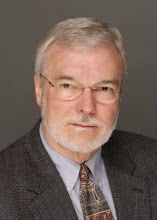
Melody Moezzi is an Iranian-American living in this country who has been in touch with relatives in Iran. She gave a very emotional report on CNN about what is happening.
The violence and intrusiveness of the government, and especially the para-military basij attacking people and entering their homes, has changed this from a fight over politics to a revolt of the people against a repressive government.
She has relatives who supported Ahmadenijad but who are now part of the resistance, because they abhor the way the people are being treated. Breaking down into tears, Melody described how old women in full chador were in the streets protesting -- and they were beaten.
"You can't beat old women !! You can't beat our grandmothers !!"
Khamenei has badly miscalculated. This has gone too far to stop now. He will either be overthrown or will quietly be ushered off stage in a bloodless, inside coup.
Ralph
Monday, June 22, 2009


Khamenei
Three important bits of news from Iran via Nico Pitney and my thoughts about where things stand:
1. There now appear to be definite plans for a general strike. Word is being spread to prepare for food shortages, no public transportation, and money shortage; expect that the government will cut off electric power.
2. It's been reported that Rafsanjani has a letter signed by 40 members of the 86 member Assembly of Experts calling for the annulment of the election.
3. Also reported but not verified: That Supreme Leader Khamenei has lung cancer and that the core argument is not just about the election but about the system of government, which started as a revolution to establish a republic but has become more like a monarchy. This is especially focused because Khamenei wants his son to replace him; and he rigged the election, thinking he would have less resistance from Ahmanedijad than from Mousavi.
Let's suppose they do annul the election, have another and Mousavi wins. It's uncertain how different Mousavi's policies would be unless they change the system of government. However, he is a very different man from Ahmanedijad, and he now is the leader of a grassroots movement for reform in which the young urban, educated class is a large portion. They want reform of social restrictions, and they want better relations with the Western world.
Also -- a nullification of the election would also mean loss of power for Khamenei. This is probably the end of his supreme control. So it would not just be Mousavi in the weak position of president with the strong Khamenei in control, but likely a change in Supreme Leader as well.
A general strike would be the logical, and probably effective, next step that the people can do to push the leadership councils to replace Khamenei and call for new elections.
All in all, I do not think this toothpaste is going to go back into the tube. The only way would be much more massive repressive measures than they've done yet, and it does not sound like Khamenei has enough support among the leaders for that.
Ralph
Sunday, June 21, 2009
Another positive development
Although the Iranian government has cracked down violently on demonstrators, there has been another surprising development:
The spokesman for the Guardian Council, which has responsibility for overseeing elections, has admitted that in 50 cities the number of votes collected is greater than the number of people eligible to vote in those cities. The vote tally affected is over 3 million.
And this was announced on the state tv. So they are acknowledging that there was election fraud on a pretty massive scale. They're saying they don't know whether this was enough to have changed the outcome, but they're no longer claiming there was no irregularity.
It could be a first step in calling for a new election.
Ralph
Next step in Iran: strikes?
Nico Pitney's running blog on happenings in Iran has a note about a statement made by the dissident cleric, Grand Ayatollah Montazeri. He is the one who last week said that no one in his right mind would believe the reported election results.
Now Montazeri is urging that, on Wednesday through Friday of this week, people mourn those who have died in the protest demonstrations. Pitney has been in touch with some Iranians, who told him that this is a covert way of asking people to strike.
That would be a significant development because it follows the pattern in the protests of 1979 that finally brought down the Shah's government and instituted the revolution. They also said that many more people would participate in strikes than risk going to street demonstrations.
Ralph
Iran -- not over yet
Yesterday's protest demonstrations had smaller crowds and they were met by violence from the government, especially the basij paramilitary forces.
It's important to look behind the government's determination to stop the street protests and try to get some sense of what may still be going on behind the scenes.
Early yesterday, the Tehran Times reported that the Assembly of Experts, a powerful clerical group, had expressed its strong support for the election results. However, it turns out that was not true. The statement had been signed by only the deputy leader of the Assembly, who is a rival of Rafsanjani and who apparently has little influence; it was not a statement by the full Assembly.
Later in the day, the Speaker of Iran's Parliament, Ali Larijani, spoke on the state tv (IRIB) and said that "a majority of people are of the opinion that the actual election results are different than what was officially announced. . . . The opinion of this majority should be respected and a line should be drawn between them and rioters and miscreants."
Not only was this the Speaker of Parliament, it was carried on state tv. And he didn't some "some people," he said "a majority of people."
It could be part of their repressive tactics: deal harshly with the "rioting" and make a show of respecting the widespread mistrust, do some sort of "recount," and still uphold the election.
Or is there some real power struggle going on behind the scenes that might end in some change?
Saying "majority" rather than "some" suggests to me that it is the latter.
Ralph
Saturday, June 20, 2009
Health care reform poll
A New York Times/CBS poll, conducted June 12-16, finds the American people way ahead of politicians in acceptance of real reform in health care.
When asked: "Would you favor or oppose the government's offering everyone a government administered health insurance plan like Medicare that would compete with private health insurance plans?"
Question: "Would you be willing or not willing to pay higher taxes so that all Americans have health insruance that they can't lose no matter what?"
Ralph
When asked: "Would you favor or oppose the government's offering everyone a government administered health insurance plan like Medicare that would compete with private health insurance plans?"
Overall: 72% favor, 20% opposeThat's pretty striking, given that it's seems such a difficult thing to accept in the halls of Congress. Of course, the insurance companies are not paying the people in the street, like they are those in the halls of Congress.
Republicans: 50% favor, 39% oppose
Democrats: 87% favor, 9% oppose
Independents: 73% favor, 22% oppose
Question: "Would you be willing or not willing to pay higher taxes so that all Americans have health insruance that they can't lose no matter what?"
Overall: 57% willing, 37% not willingQuestion: ""Which is a more serious problem right now: keeping health care costs down or providing health insurance for Americans who do not have any?"
Income > $50,000: 64% willing, 27% not willing
Income < $50,000: 52% willing, 44% not willing
All respondents: costs down 26%, provide insurance 65%If our Congress listened to the people instead of the insurance industry, effective health care reform with a public option would be a slam-dunk.
Republicans: costs down 52%, provide insurance 42%
Democrats: costs down 15%, provide insurance 78%
Independents: costs down 24%, provide insurance 64%
Ralph
Daschle explains
Tom Daschle responded to a question from the Washington Post:
WP: You made headlines the other day for dismissing the need for a public plan. Want to talk a bit more on that?TD: I don't know where that came from. We've been pushing back on that all day. I didn't say that. I have said emphatically I support a public plan. A Medicare-for-all public plan. Any federal plan. For all the reasons that have been made for years. It's important for cost, for choice, for competition, for popularity. I strongly support it.
What I did say is that I'm willing to compromise on most things to bring the package across the line. The plan we agreed to yesterday was that states could offer public plans with a federal fall back. That's not my first, second, or third choice. But given the concessions my colleagues made on universal coverage and an employer mandate and everything else, that's the essence of compromise.
I think the problem here is that the negotiating and compromising are being made before the plan is presented, so it looks like those we counted on (the Senate, Tom Daschle, maybe Obama) are giving away the key element without a fight.
Ralph
Subscribe to:
Posts (Atom)