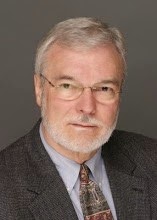
Idan Barir, a former artillery crew commander in the Israeli army during the Second Intifada, wrote this, which was printed on Huffington Post:
". . . Harsh
criticism of Israel followed each incident [bombing of the U. N. school and a busy market place] but -- as in the past --
Israel defended its actions, arguing that it was targeting militants and
doing its best to avoid civilian casualties.
"I served as a crew
commander in the Israeli artillery corps . . . . and I feel compelled to counter this claim from Israel. . . . In
using artillery against Gaza, Israel therefore cannot sincerely argue
that it is doing everything in its power to spare the innocent.
"The truth is artillery shells cannot be aimed precisely and are not meant to hit specific targets. A standard 40 kilogram shell is
nothing but a large fragmentation grenade. When it explodes, it is meant
to kill anyone within a 50-meter radius and to wound anyone within a
further 100 meters. . . .
"It's true that in at least some cases, the army
has informed civilians of its plans to attack a certain area and advised
them to leave. But this in no way excuses the excessive damage and huge
toll on civilian lives.
"I write this with great sorrow for
civilians hurt on both sides. Sorrow for our soldiers who have fallen in
this operation, and sorrow for the future of my country and the entire
region. I know that as I write, soldiers like me have fired shells into
Gaza.
"They had no way of knowing who or what they would hit.
"Faced
with so many innocent casualties, it is time for us to state very
clearly: this use of artillery fire is a deadly game of Russian
roulette. The statistics, on which such firepower relies, mean that in
densely populated areas such as Gaza, civilians will inevitably be hit
as well. The IDF knows this, and as long as it continues to use such
weaponry, it will be hard to believe when it claims to be minimizing
civilian deaths.
"As a former soldier and an Israeli citizen, I feel compelled to ask today: have we not crossed a line?"
Perhaps
the Israeli defense forces feel they have no choice, that the Hamas
military forces and weapons are so intertwined with the dense population
that it is their only defense.
Is that not itself an argument for finding a non-military solution?
Israel says that the Palestinians scuttle the negotiations for peace;
but the Palestinians have an equally believable claim that the Israelis
refuse to budge on their basic demands, too.
Consider this: which one has come closer to destroying the other?
Ralph
PS: I just read another plea from a former member of the Israel Defense Force, Yehuda Shaul:
" . . . . Hamas is a cruel and cynical enemy. But what have we become? Is it not a
cynical act to bomb Hamas members’ family homes that don’t . . . . pose an immediate threat
to soldiers or civilians – with the knowledge that there are innocent
family members who will be harmed inside? Does the fact that a family
didn’t heed our telephone request to leave a building grant us the right
to sentence them to death?
"I wrote that Hamas controls Gaza, but Hamas isn’t alone. . . . Israel controls the daily entry and exit of
goods from the Gaza Strip; prevents access to Gaza from the air and the
sea, limiting the fishing area for Palestinians; Israel even controls
the population registry in the region. . . . Can we as Israelis earnestly shrug
off our responsibility to the residents of the Gaza Strip? . . . .
"We must stop sending our friends
and our soldiers on operations that will definitively harm civilians. We
must end Israel’s protracted control over the Gaza Strip."
AJC columnist Jay Bookman wrote a very thoughtful piece today about our military capability and our presumed obligation to act militarily in other countries. The Obama administration has been called upon by the more hawkish among us to intervene with military force in: Bosnia, Iraq, Afghanistan, Rwanda, Somalia, Libya, Iran, Pakistan, and a whole host of "Arab Spring" stuggles. Are we, as former Secretary of State Madeleine Albright once put it, "the indispensable nation?" The world's police? President Obama has tried to move us away from that aspiration in a world that has far too many troubled spots.
Even today, they are struggling with internal debates about how and how much to intervene in Iraq . . . again. We have been doing airstrikes; do we go in with ground troops to rescue the refugees on Mount Sinjar? Is that a slippery slope that we couldn't resist escalating?
Bookman asks: Does having the capability sometimes get confused with also having the obligation to act militarily?
"Nobody else, for example, has the capability to intervene on behalf of those terrorized people on Mount Sinjar [in Iraq], and with genocide at stake, possessing the capability to act means we have an obligation to act."
"The problem is that overwhelming military power does more than produce an obligation to act. It also produces the temptation to act. Time and again, our inability or unwillingness to distinguish between temptation and obligation has gotten us into trouble. In 2003, to cite the most relevant example, there was no obligation to invade Iraq; there was merely temptation that was marketed to us as an obligation."
What wiser heads have learned in the past decade seems to have not yet penetrated the thinking of our hawks: that our military might is not matched by our wisdom and knowledge of other countries and other cultures. Look what a disaster resulted from the willful ignorance and blithe neglect of Iraqi culture and religions by the Bush-Cheney-Rumsfeld debacle in Iraq after our successful military toppling of their government.
Bookman writes:
"Having the most powerful military force on the planet does not in any way enhance our foresight; to the contrary, the arrogance that it produces can blind us and deceive us into vastly exaggerating our powers to force others to behave as we think appropriate.
"I guess you could say that the closer we get to omnipotence, the further we get from omniscience. Put in less fancy terms, power can make you stupid, and it's the stupidity that usually gets you."
Fortunately, President Obama and his advisers know this; so we get an emphasis on diplomacy and economic sanctions and on building coalitions of allies to bring about solutions in these troubled spots of the world. But meanwhile we have people clinging to a mountainside without food and water and facing certain death if we don't help. Can we provide humanitarian help without succumbing to the temptation to escalate into another military war?
Ralph
Within hours after I posted "Worried about Hillary," I ran across an article in the liberal Israeli newspaper Haaretz by Peter Beinart, who is a liberal, American Jew who teaches journalism at CUNY. A former editor of The New Republic, he currently writes for several liberal journals and in 2012 published The Crisis of Zionism.
Beinart's position is similar to what I have tried to articulate here -- pro-Israeli people; not so sympathetic to the right-wing movement that supports current policies toward the Palestinians. His book so angered many in the Jewish community, that his scheduled lecture here at the Jewish Community Center was cancelled. Another venue was found and he spoke to an overflow crowd.
The title of his current Haaretz article is: "Israel's new lawyer: Hillary Clinton."
"Who’s the Israeli government’s best spokesperson? Ron Dermer? Michael Oren? Bibi himself? Nope. It’s Hillary Clinton. In her interview on Sunday with Jeffrey Goldberg, Clinton offered the most articulate, sophisticated, passionate defense
of Netanyahu’s conduct I’ve heard from a government official on either
side of the Atlantic. Unfortunately, important chunks of it aren’t true."
Beinart takes up each of her claims and shows how she follows the same pattern as Netanyahu and his spokespersons: Take a grain of truth that favors Israel or Bibi himself and leave out any truths that present the other side of the picture.
A recent example, from her time as Secretary of State, is her claim that:
"'I got Netanyahu to agree to
the unprecedented settlement freeze… It took me nine months to get Abbas
into the negotiations even after we delivered on the settlement
freeze.'
"What’s
striking, again, is what Clinton leaves out. The settlement freeze was
indeed, unprecedented. Unfortunately, it didn’t actually freeze
settlement growth. . . . the 'freeze' exempted East Jerusalem [and] . . . . buildings on
which construction had all ready begun . . . settlers spent the months preceding the “freeze” feverishly breaking
ground on new construction, on which they continued to build during the
ten month 'freeze' . . . . As a
result, according to Peace Now, there was more new settlement construction in 2010 -- the year of the freeze -- than in 2008. As the Obama administration envoy George Mitchell admitted . . . the Obama administration had wanted a freeze that truly stopped settlement growth but 'we failed'."
Beinart also disputes the claim that Abbas refused to negotiate and offers evidence that Palestinian representatives tried repeatedly to submit official documents detailing key negotiating proposals, which the Israelis were unwilling to even read. Clinton does not mention this in her interview, even though she claims to have been intimately involved in the process.
After refuting other claims about the negotiations, Beinart writes:
"Why
does Clinton again and again endorse Netanyahu’s view of the
Israeli-Palestinian conflict even when it contradicts long-standing
American positions? Because she’s so willing to see the world through
his eyes. . . . U.S. officials should understand, and empathize with,
Israeli leaders, even right-wing ones. But what’s missing from Clinton’s
interview is any willingness to do the same for Palestinians. If it’s
so easy to understand why some Israelis might want perpetual military
control of the West Bank, why can’t Clinton understand why Palestinians -
after living for almost fifty years under a foreign army - might not
want it to indefinitely patrol their supposedly independent state?
"One
of the hallmarks of Barack Obama . . . has been his
insistence on giving voice to the fears and aspirations of both sides.
. . . In Jerusalem last March, he spoke movingly, and in detail about the Jewish story, but also asked
Israelis to “put yourself in their [the Palestinians] shoes. Look at
the world through their eyes.” In her interview with Goldberg, that’s
exactly what Clinton does not do. Her interpretations of recent
Israeli-Palestinian history reflect from a deep imbalance: a willingness
to see reality through Israeli eyes and an almost total refusal to do
the same for Palestinians. . . .
"“For far too long,” wrote Aaron Miller in 2005, “many American officials involved in Arab-Israeli peacemaking, myself
included, have acted as Israel's attorney, catering and coordinating
with the Israelis at the expense of successful peace negotiations.” From
the beginning, Barack Obama has tried to avoid that.
Although [Obama] hasn’t
brokered Israeli-Palestinian peace, he has tried to make good on his
campaign promise to 'hold up a mirror' to both sides. In Hillary Clinton, by contrast, at least judging from her interview on
Sunday, Israel has yet another lawyer. And a very good one at that."
Exactly. And that is what worries me about Hillary. Is she just making tactical political decision to distance herself from Obama? Or is this evidence of her inability or unwillingness to consider both sides of such important matters?
Ralph
Hillary Clinton is worrying me. What I didn't like in her 2008 campaign -- too scripted, too cautious, hewing too close to the centrist position on issues where I wish she were more progressive and passionate -- seems to be showing up again, more and more.
What I really want is a blend of Hillary's experience and Elizabeth Warren progressive populism and her ability to simply "tell it like it is." Hillary is too worried about offending the powers that be and the status quo.
I'm still willing to champion her as the 2016 nominee, because (1) she can win and (2) no one has ever before been better prepared to be president. In addition, she is very smart and she has a good heart on a personal level. I'm just not sure she translates it into policy when there are competing groups to appease.
My worry increased another notche a couple of days ago when she openly broke with President Obama's position on Syria, saying she felt we should have intervened. But then I reasoned: she needs to make a break with him for political reasons, lest she be painted as running for Obama's 3rd term. So, ok on that one.
But I got a real chill yesterday when I read that she is spouting Benjamin Netanyahu's propaganda. I'm fine with her declaring her support for Israel. I thought it was going a little far to call it a "vociferous defense of Natanyahu," and then she re-iterated what I know to be wrong. Here's what she told the Atlantic's Jeffrey Goldberg:
"What you see on TV is so effectively stage-managed by Hamas, and always has been. . . What
you see is largely what Hamas invites and permits Western journalists
to report on from Gaza. It’s the old PR problem
that Israel has. Yes, there are substantive, deep levels of antagonism
or anti-Semitism towards Israel, because it’s a powerful state, a really
effective military. And Hamas paints itself as the defender of the
rights of the Palestinians to have their own state. So the PR battle is
one that is historically tilted against Israel.”
From what I've heard and read, this is just not true. Israel is the one winning the PR battle, by far. All you need do is listen for 2 minutes to Netanyahu's spokesman Mark Regev (see ShrinkRap on Aug 4th). Michael Calderone wrote in the Washington Post:
"Some commentators recently suggested Israel was losing the media war . . . . The reasons they pinpointed weren't
anti-Semitism or historical antagonism toward Israel, but that
journalists' real-time coverage of devastation and civilian deaths --
including those of hundreds of Palestinian children -- offered a new
perspective on the long-running Israeli-Palestinian conflict.
"The Israeli foreign ministry recently highlighted some journalists' allegations of Hamas intimidation, but those
journalists appear to be in the minority. Haaretz, a left-leaning Israel
paper, reported Friday that there have been "only a handful" of such allegations,
despite 710 foreign journalists recently reporting inside Gaza.
"Several
journalists, many of whom spoke anonymously to Haaretz, flatly rejected
the claim that Hamas intimidated them into not reporting events they
witnessed. One reporter who spent three weeks in Gaza told
Haaretz “it’s a phony controversy” and an attempt by Israel to claim
media bias. . ."
While it is true that we do not see Hamas fighters firing the rockets into Israel, the international journalists themselves explain that rockets are always fired from secret locations, and its true they do not have access. But the tv news has been full of rockets being blown up in the air over Israel by their Iron Dome system. There was no secret that Hamas fired the rockets.
Yes, we've seen endless films of Israeli missiles and shells destroying Palestinian buildings and homes. Even Netanyahu doesn't claim that there is comparable footage of Hamas rockets destroying Israeli buildings and homes that are being suppressed -- because most of the rockets are destroyed before they cause destruction. So what does he claim is being censored?
Perhaps the truth is somewhere between the two. But I certainly don't believe that Hamas is controlling what we see on TV -- nearly as much as Israel is trying to. The New York Times reported recently that their access to Israeli news sources is dependent on an agreement to withhold what Israel does not want them to publish.
Here's what I think has happened to news coverage. Journalists have not been denied access by Hamas; on the contrary they have had unprecedented access to cover the story of Palestinian deprivation and suffering.
We have seen -- in stark, real-time graphic reality --the effects of Israel's self-defense. These images, as opposed to Israel's stated intentions is seeking to defend itself -- are what has shocked the world.
Netanyahu -- repeated by Clinton -- has it backwards. It's more access, not less, that has changed the world opinion of what's happening. What has become so starkly clear is that Israel's fight is with Hamas -- but the Palestinian people are the ones suffering. I find little sympathy for Mark Regev's (Netanyahu's spokesman) assertion that, because they put Hamas in power through an open election, the Palestinian people are therefore responsible for their own deaths when Israel defends itself against Hamas.
Again, I want to emphasize that I am not siding with Hamas. They do some pretty bad things. But I am strongly in support of the Palestinian people in their extreme deprivation and suffering, as I also strongly support the Israeli people's right to a peaceful existence. For Hillary to ignore that difference between Hamas and the Palestinian people, in her vociferous defense of Netanyahu's talking points, worries me . . . a lot.
Ralph
Fearmongers and a few weirdos like Donald Trump have sounded the alarm about bringing the two American health care workers home from Africa to treat their Ebola virus infection at Emory University Hospital in Atlanta. These uninformed alarmists are spreading misinformation about how risky this is, with visions of an epidemic outbreak in the U.S.
The Ebola virus does have a high mortality rate, at least in the poor treatment conditions in undeveloped countries; but it is not particularly easy to transmit from one person to another. First, patients are not infectious until after they begin to have symptoms -- which is different from most viral diseases.
Second, there is no an airborne risk; it is spread through body fluids -- similar to the HIV virus, except that Ebola can be found in all body fluids, not just blood and semen, as in HIV.
Third, Emory University Hospital has had a specially constructed isolation unit and a staff team trained to deal with such patients for the past 12 years. The unit was actually part of a deal with the nearby CDC, with an agreement to treat CDC employees with untreatable diseases like SARS, Ebola, and anthrax.
Further, the staff were all eager for this opportunity. They vied with each other as to who would get to ride in the specially prepared ambulance to pick the patients up at Dobbins Air Force Base. Four Emory doctors and 15 nurses have volunteered to take care of the patients at Emory. Two of the nursing staff even cancelled vacation plans.
So, what is the discrepancy in understanding? In Africa, with primitive medical treatment conditions, the mortality rate is said to be 60% or as high as 90%. But, according to one of the Emory doctors, because we lack a cure at this point, the most important factor is first class medical supportive care to give the body time to build its own antibodies to the virus.
Besides the humanitarian spirit of the Emory health care team, it is an opportunity for them to advance knowledge about new ways of helping sustain such patients through that time.
The other important factor in having the patients here at Emory is the proximity to the CDC to make the best use of its research facilities and hopefully to lead to a vaccine or anti-viral treatments some day.
The main point that people need to know is that those who will have most contact with these patients are the ones most eager to have them in this special unit at Emory University Hospital.
Latest word is that both patients are improving.
Ralph
Fresh from a generally favorable extensive profile in The New Republic, Rand Paul's presidential aspirations to run for president in 2016 are not in doubt. In fact, the gist of that profile was showing him as a much more formidable candidate for the Republican nomination than his father.
The article even called him a "threat" to both parties, especially his appeal to younger voters, a main strength of recent Democratic victories, as well as a group Republicans need to snare if they are to win.
Paul is obviously tempering his libertarian purism in order to position himself as a possible Republican nominee -- something his father never did, retaining his libertarian principles, even when it led to his becoming the butt of jokes.
Rand Paul has been less isolationist, when it comes to foreign policy; less Ayn Randian, when it comes to economics; and less anti-government, when it comes to domestic programs, than his father.
It's the foreign policy differences that set him off most clearly with his mainstream Republican colleagues, who characteristically want Obama to intervene more with military strikes. Even now, when Obama surprised many with the airstrikes against the ISIS insurgents sweeping through Iraq, John McCain is calling for him to extend these strikes into Syria as well. There's never enough bombing to suit McCain, it seems.
Which brings us to the point of talking about Rand Paul today. He so far has remained silent on this latest foreign policy hot issue. The genocidal and humanitarian nature of this crisis gives it wider support, even among those who lean toward non-intervention.
So it's a tricky issue for Paul. If he opposes it, it makes him look uncaring; if he supports it, then it makes his break with the libertarian non-intervention policy concrete and "big news" of a break, which Paul's gradual strategy is not yet ready for.
Will be interesting to watch.
Ralph
Now the conservatives are going after judges they deem too liberal -- in a big way. Tennessee has the system that's a sort of compromise between judges being appointed and judges being elected. They are initially appointed by the governor; then, after a certain number of years, voters decide whether to "retain" them or oust them.
Three members of the Tennessee Supreme Court, including the chief justice, were up for a retention vote. Conservatives groups spent big money on campaign ads trying to oust them. All three won their retention votes. As Justice Sharon Lee said:
"Tennessee justice is not for sale. . . . They can spend all the money they want -- I think they spent well over #1 million -- but they cannot buy this election. They cannot buy our system of justice."
That's encouraging to hear. Unfortunately, it's not always the case. In 2010, in a similar system, voters in Iowa voted to oust three State Supreme Court justices who had voted to overturn the ban on gay marriage in Iowa. California ousted three justices back in 1986 over capital punishment.
What's new here is the amount and the sources of the money. Yes, you guessed it. A lot of it came from Americans for Prosperity -- meaning the Koch brothers. The Lt. Governor also kicked in almost half a million from his own political action committee.
These three in Tennessee survived. But they aren't going to give up easily. For them, it's just another battleground in their effort to buy the kind of government they want. Any politicizing of the judicial system is a terrible idea; we need a better system for choosing judges.
Ralph