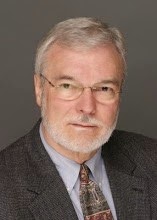
Alabama's Supreme Court Chief Justice, Roy Moore, already had a dubious claim to fame. In 2003, when he previously served as Chief Justice, he commissioned and installed in the Alabama Judiciary Building a two and one-half ton granite monument inscribed with the Ten Commandments. A legal battle ensued, a federal judge ordered him to remove the monument. Moore refused, and then the Alabama Court of the Judiciary stepped in and removed Moore from office.
Moore then twice ran for governor and lost. In 2011 he ran again for Alabama Supreme Court Chief Justice -- and won. So, not to be outdone by his previous defiance as the state's chief judge, he has come up with another act of defiance.
It began following the U. S. Supreme Court decision last June to overturn bans on same-sex marriage in Michigan, Kentucky, Ohio, and Tennessee. SCOTUS chose to hear those four appeals, because they were all from the 8th Circuit and represented the only controversy on the issue at the appeals court level. All the other circuit appeals have resulted in bans being overturned. And it is widely accepted that SCOTUS' ruling applies to all 50 states, not just the four states whose cases were heard.
Widely accepted, that is, except in Justice Roy Moore's narrow world inhabited by the likes of Kim Davis and her supporters. Soon after the SCOTUS decision last June, Moore refused to order county clerks in Alabama to issue same-sex licenses to gay couples, although most did.
Now Moore has issued an administrative order barring state judges from issuing the licenses, claiming that SCOTUS' decision struck down marriage bans only in the four states named in the suits. His order referred to the "confusion and uncertainty" about the ruling and referenced the jailing of Kim Davis as an example.
Like his soul-mates Kim Davis, who refused to issue same-sex marriage licenses in a Kentucky county, and the Bundy crowd occupying a federal building in Oregon to demand that national park land be returned to local control, Moore seems not to accept federal courts and federal laws as superceding state courts and laws. Moore claims, somewhat blithely, that the Alabama Supreme Court's interpretation of the SCOTUS decision on marriage equality is "yet to be determined."
Is that absurd claim clear? He wants Alabama's court to "interpret" a decision by the U.S. Supreme Court? It's questionable whether Moore really thinks he has a case; perhaps he's just grandstanding again. What he thinks he can wring out of this is very murky indeed.
We shall see. Once upon a time, federal marshals were sent to enforce a U.S. Supreme Court decision requiring the integration of pubic schools. Will we see the same thing happening on gay marriage? Would this be the 2016 latest version of a "shotgun wedding?"
Ralph
Thursday, January 7, 2016


Wednesday, January 6, 2016
If an armed guard had been on duty at this church, would this man have been shot?
OK. This is one anecdote, and maybe police officers perform similar acts of courage like this every day without resort to their guns -- and we just don't hear about them. Good news is so often not treated as news. If so, then police departments should start letting us know. It would be the best antidote to the increasing cynicism about fairness in our justice system.
But let's take this inspiring anecdote and instructive lesson just as it was reported by Leslie Salzillo on Daily Kos:
Maybe we need less police training in the use of guns and more in a pastoral approach to disturbed people. You know the old adage:
Ralph
But let's take this inspiring anecdote and instructive lesson just as it was reported by Leslie Salzillo on Daily Kos:
"Minutes before the clock struck midnight and most of the country was about to ring in the New Year, a church congregation in Fayetteville, North Carolina, faced a horrifying scare after a 57-year-old man walked into the church armed with a rifle and ammo clip.
"Pastor Larry Wright, who is also a Fayetteville city councilman, was giving a sermon to 60 members of adults and children, when he noticed a man enter the church holding a rifle in the air. Wright left the podium and confronted the stranger and convinced him to disarm. Nate Rogers with WNCN news reports:
He said, ‘I came here with some terrible things on my mind, I was going to do some bad things’,” Pastor Wright told WNCN."Church members started screaming, and some ran for the exit. But what happened next is stunning.
Wright says the man calmly shared he’d been previously hurt by the church, recently released from prison and was also a veteran. He then asked for prayers. Wright took the gun away and called for other men to come and embrace the suspect."The man fell to his knees and cried. . . . Police lead the man away after the service, did not charge him, and at this time, the man is receiving treatment at a local facility."
* * *
We've been saturated lately by news stories about excessive police use of their guns -- with no apparent effort to handle "a man with a gun" any way except by shooting him, even when it was a 12 year old boy with a toy gun. In contrast is this story of a courageous pastor reaching out to a disturbed man with a gun and preventing a double tragedy to his congregation and to the man himself. Everyone is fortunate that there was no armed guard on duty, and the pastor himself handled the situation.Maybe we need less police training in the use of guns and more in a pastoral approach to disturbed people. You know the old adage:
If all you have is a hammer, everything looks like a nail.
Ralph
Tuesday, January 5, 2016
Gov. Deal backs down
On Monday, Gov. Nathan Deal (R-GA) rescinded his executive order of some weeks ago in which he ordered all state agencies not to participate in federal efforts to resettle Syrian refugees in the state of Georgia (i.e., no food stamps or other assistance).
After warnings from the federal government, which has sole authority over refugee settlement, and after an opinion by Georgia's Attorney General Sam Olens that the governor did not have the authority, Gov. Deal issued his one-sentence order that rescinded his earlier executive action.
Nathan Deal has been wrong again and again, but it's usually been errors in judgment driven by his conservative political ideology, as well as a major breach of common sense and humantarian sensibility. This time he was wrong on a matter of the law as well.
Of course, he's already guilty of lacking common sense and humantarian sensibility in refusing to expand Medicaid -- that would help hundreds of thousands of Georgians get health care and bring in huge amounts of federal money, create jobs, etc.
Ralph
After warnings from the federal government, which has sole authority over refugee settlement, and after an opinion by Georgia's Attorney General Sam Olens that the governor did not have the authority, Gov. Deal issued his one-sentence order that rescinded his earlier executive action.
Nathan Deal has been wrong again and again, but it's usually been errors in judgment driven by his conservative political ideology, as well as a major breach of common sense and humantarian sensibility. This time he was wrong on a matter of the law as well.
Of course, he's already guilty of lacking common sense and humantarian sensibility in refusing to expand Medicaid -- that would help hundreds of thousands of Georgians get health care and bring in huge amounts of federal money, create jobs, etc.
Ralph
Race matters: What if Tamir Rice had been white? What if the "affluenza" teen had been black?
Tamir Rice was a 12 year old black boy, playing in the park with a toy gun. He did not kill anybody, but the police shot him dead on the spot.
Ethan Couch was a 16 year old white boy, drunk as a skunk while driving his car. He crashed into a group of people and killed four of them. He got probation -- which he and his mother then violated by fleeing to Mexico.
Part of Ethan's defense included a psychologist testifying that he suffered from "affluenza," a made-up 'diagnosis' to support the claim that he had grown up too affluent and too spoiled to have developed a sense of responsibility for his actions.
In other words, the police shot the innocent black boy; the guilty white boy got 'excused.'
Can any sane person honestly believe that race had nothing to do with this starkly different outcome of these two boys' lives?
There's more. In the first place, someone observing Tamir playing in the park called the police, no doubt because he was black. If he had been a white 12 year old playing in the park, would anyone have: (1) Been scared of him? (2) Assumed he was older and more dangerous than he was? (3) Been as careless in transmitting info to the police officers? (4) Been so ready to shoot on arrival?
And in the courtroom: Can any sane person honestly imagine that a black boy from a poor family, who lived in a neighborhood where violence was common, where expectations were high that he would spend some of his life in jail, simply because he was black -- can anyone imagine that some smart, pricey lawyer would invent an absurd diagnostic term to excuse his irresponsible behavior, like the "affluenza" that was applied to Ethan Counch? In short, can you imagine an argument for "depriva-fluenza?"
If he had been white, would the police have driven the squad car right up to the figure in the park and been so ready to shoot him even before the car came to a stop?
No, I'm not saying this is only about race. The way the prosecutor handled the case was clearly prejudicial toward a non-indictment. But was that because Tamir was black and the two officers involved were white? Or was is because it was police officers who did the shooting, and they almost never get charged with a crime?
There are two major problems in this: (1) race and (2) police accountability for excessive use of force. Both are major problems that must be faced. The explosion of cell phone videos is increasingly forcing the latter problem to be addressed. It's shocking to realize the low bar set by the Supreme Court that lets officers go free. All they have to claim is that it was reasonable to fear for their lives. But that has fostered a shoot first mentality rather than training for skills in defusing a situation or talking down a distraught person with a gun.
Ralph
Ethan Couch was a 16 year old white boy, drunk as a skunk while driving his car. He crashed into a group of people and killed four of them. He got probation -- which he and his mother then violated by fleeing to Mexico.
Part of Ethan's defense included a psychologist testifying that he suffered from "affluenza," a made-up 'diagnosis' to support the claim that he had grown up too affluent and too spoiled to have developed a sense of responsibility for his actions.
In other words, the police shot the innocent black boy; the guilty white boy got 'excused.'
Can any sane person honestly believe that race had nothing to do with this starkly different outcome of these two boys' lives?
There's more. In the first place, someone observing Tamir playing in the park called the police, no doubt because he was black. If he had been a white 12 year old playing in the park, would anyone have: (1) Been scared of him? (2) Assumed he was older and more dangerous than he was? (3) Been as careless in transmitting info to the police officers? (4) Been so ready to shoot on arrival?
And in the courtroom: Can any sane person honestly imagine that a black boy from a poor family, who lived in a neighborhood where violence was common, where expectations were high that he would spend some of his life in jail, simply because he was black -- can anyone imagine that some smart, pricey lawyer would invent an absurd diagnostic term to excuse his irresponsible behavior, like the "affluenza" that was applied to Ethan Counch? In short, can you imagine an argument for "depriva-fluenza?"
If he had been white, would the police have driven the squad car right up to the figure in the park and been so ready to shoot him even before the car came to a stop?
No, I'm not saying this is only about race. The way the prosecutor handled the case was clearly prejudicial toward a non-indictment. But was that because Tamir was black and the two officers involved were white? Or was is because it was police officers who did the shooting, and they almost never get charged with a crime?
There are two major problems in this: (1) race and (2) police accountability for excessive use of force. Both are major problems that must be faced. The explosion of cell phone videos is increasingly forcing the latter problem to be addressed. It's shocking to realize the low bar set by the Supreme Court that lets officers go free. All they have to claim is that it was reasonable to fear for their lives. But that has fostered a shoot first mentality rather than training for skills in defusing a situation or talking down a distraught person with a gun.
Ralph
Monday, January 4, 2016
Dire predictions if Obama was re-elected in 2012 -- how those things turned out
During the 2012 re-election campaign, Republicans made some dire predictions about what would happen if Barack Obama was given a second term. Here are four big ones, compiled by Judd Legum for ThinkProgress blog.
1. Gas prices would soar. Senator Mike Lee (R-UT) predicted $6.60 per gallon. Newt Gingrich, running for the GOP nomination, said Obama's energy policies would pump prices to $10 a gallon -- and promised to get the cost down to $2.50 if we elected him. Ha. Ha. I think on my last fill-up, I paid $1.93. And this is despite the "Obama policies" of rejecting the Keystone XL pipeline, more EPA regulation, and limited drilling on public land.
2. Umemployment would be stuck at over 8%. That year, 2012, it had been between 8.1% and 8.3% all year. Instead the national rate is 5%, and since January 2013 over 7.8 million new jobs have been created.
3. The stock market would crash. Some experts said the stock market would drop at least 20%. Despite a downturn in 2015, the Dow Jones Industrial Average (one of the standard indexes) is up 27% compared with what it was when Obama was re-elected.
4, The entire economy was supposed to crash, according to conservative pundits. Rush Limbaugh predicted "the country's economy is going to collapse if Obama is re-elected." He also predicted that California would declare bankruptcy; instead it currently has a $4 billion budget surplus. The U. S. economy is growing at a respectable rate of 3.9% in the second quarter and 2% in the third quarter of 2015.
Nevertheless, wage growth has remained flat, and income inequality has only gotten worse. Both of those, however, are more the result of Republican policies of tax cuts for the wealthy, slashing of public sector jobs, and refusal to raise minimum wages. If given a freer hand by congress, Obama would have done the opposite, and those numbers would be going the other way as well.
Ralph
1. Gas prices would soar. Senator Mike Lee (R-UT) predicted $6.60 per gallon. Newt Gingrich, running for the GOP nomination, said Obama's energy policies would pump prices to $10 a gallon -- and promised to get the cost down to $2.50 if we elected him. Ha. Ha. I think on my last fill-up, I paid $1.93. And this is despite the "Obama policies" of rejecting the Keystone XL pipeline, more EPA regulation, and limited drilling on public land.
2. Umemployment would be stuck at over 8%. That year, 2012, it had been between 8.1% and 8.3% all year. Instead the national rate is 5%, and since January 2013 over 7.8 million new jobs have been created.
3. The stock market would crash. Some experts said the stock market would drop at least 20%. Despite a downturn in 2015, the Dow Jones Industrial Average (one of the standard indexes) is up 27% compared with what it was when Obama was re-elected.
4, The entire economy was supposed to crash, according to conservative pundits. Rush Limbaugh predicted "the country's economy is going to collapse if Obama is re-elected." He also predicted that California would declare bankruptcy; instead it currently has a $4 billion budget surplus. The U. S. economy is growing at a respectable rate of 3.9% in the second quarter and 2% in the third quarter of 2015.
Nevertheless, wage growth has remained flat, and income inequality has only gotten worse. Both of those, however, are more the result of Republican policies of tax cuts for the wealthy, slashing of public sector jobs, and refusal to raise minimum wages. If given a freer hand by congress, Obama would have done the opposite, and those numbers would be going the other way as well.
Ralph
Sunday, January 3, 2016
Update on Mideast madness
Update from the New York Times on the Saudi Arabia execution:
Saudia Arabia, which has a Sunni monarchy, and Iran, which is ruled by Shi'ite clerics, have a long standing animosity that is seen as both a religious sectarian conflict as well as a struggle over political/economic dominance in the region.
The Saudi government's execution of an important leader of the small minority of Shi'ia in its country is playing out on the world stage as a major provocation, leading to attacksd on Saudi embassies, especially in Tehran. Iran's Supreme Leader Ayatollah Khamenei had on his web site a photo of a supposed Saudi executioner alongside a photo of an ISIS executioner, with the question of "Is there any difference?"
The U.N. high commissioner of human rights, issued a rebuke of Saudi Arabia, expressing concern over the surge in Saudi executions. The U.N. secretary general, the U. S. and the European Union have all condemned the execution of Sheikh Himr who, according to Ayatollah Khamenei "neither encouraged people to take armed action nor engaged in secret plotting" but was merely openly criticizing the Saudis and promoting his religious values of virtue.
I'm going out on a limb and suggest that the agreement with Iran over its nuclear future is partly responsible for this measured reaction from the rulers of Iran. It can't hurt for them to have learned that they can rejoin the world of nations, and even gain the upper hand diplomatically and in reputation, by exercising responsible behavior in a crisis. At this point, the Saudis look like the bad guys, the Iranians the good guys.
Ralph
Afternoon Update: Saudi Arabia has now severed relations with Iran and given their diplomatic representatives 48 hours to leave the country. The Saudi government said that it could not allow Iran to breach the security of its country, referring to the protesters in Iran breaking into the Saudi embassy. This raises the Mideast crisis another notch. It is the cooperation of these two countries that could most help in the struggle against ISIS.
Saudia Arabia, which has a Sunni monarchy, and Iran, which is ruled by Shi'ite clerics, have a long standing animosity that is seen as both a religious sectarian conflict as well as a struggle over political/economic dominance in the region.
The Saudi government's execution of an important leader of the small minority of Shi'ia in its country is playing out on the world stage as a major provocation, leading to attacksd on Saudi embassies, especially in Tehran. Iran's Supreme Leader Ayatollah Khamenei had on his web site a photo of a supposed Saudi executioner alongside a photo of an ISIS executioner, with the question of "Is there any difference?"
"Despite the rhetoric, however, the Iranians seemed to be taking steps to prevent the dispute from escalating further. Forty Iranians were arrested on Saturday night for the violence — a sign that the authorities were trying to keep public outrage from getting out of control."Hassan Rouhani, Iran's elected president, condemned the execution but also deplored the violent response in Iran, saying that rogue groups committing illegal actions damages the reputation of Iran.
The U.N. high commissioner of human rights, issued a rebuke of Saudi Arabia, expressing concern over the surge in Saudi executions. The U.N. secretary general, the U. S. and the European Union have all condemned the execution of Sheikh Himr who, according to Ayatollah Khamenei "neither encouraged people to take armed action nor engaged in secret plotting" but was merely openly criticizing the Saudis and promoting his religious values of virtue.
I'm going out on a limb and suggest that the agreement with Iran over its nuclear future is partly responsible for this measured reaction from the rulers of Iran. It can't hurt for them to have learned that they can rejoin the world of nations, and even gain the upper hand diplomatically and in reputation, by exercising responsible behavior in a crisis. At this point, the Saudis look like the bad guys, the Iranians the good guys.
Ralph
Afternoon Update: Saudi Arabia has now severed relations with Iran and given their diplomatic representatives 48 hours to leave the country. The Saudi government said that it could not allow Iran to breach the security of its country, referring to the protesters in Iran breaking into the Saudi embassy. This raises the Mideast crisis another notch. It is the cooperation of these two countries that could most help in the struggle against ISIS.
The Saudis just threw gasoline on Middle East fires
Saudi Arabia has executed 47 prisoners, including the outspoken and influential Shiite cleric, Sheikh Nimr al-Nimr, who has been highly critical of the ruling dynasty and was recognized as the leader of the young Shiite minority in Saudi Arabia. This has ignited protests and attacks on Saudi embassies in the Middle East, especially in Tehran where protesters set fire and ransacked the Saudi embassy.
The official explanation is that 43 of the 47 were Sunni jihadists rebels, some of them members of al Queda; and 4 were Shi'ites who had attacked Saudi police. But Human Rights Watch's director, Sarah Leah Whitson, said that "Regardless of the crimes allegedly committed, executing prisoners in mass only further stains Saudi Arabia's troubling human rights record."
Executing 43 Sunni rebels was apparently meant to show that this was about getting rid of threats to overthrow the government, not a Sunni./Shi'ia sectarian killing. But other Shi'ia nations are not going to see it that way, when the only person of note was the Shi'ia cleric who is widely seen as the inspirational leader of the Shi'ia minority in Saudi Arabia. It's reminiscent of the Romans crucifying two petty thieves alongside Jesus, trying to minimize the importance of this inspiring enemy of the ruling powers.
In addition to everything else, this puts further strain on the United States in the delicate negotiations to get a coalition -- some enemies of each other -- to fight ISIS in Syria and Iraq. Saudi Arabia, a U.S. ally, is a current member of the United Nations Human Rights Council and usually has the support of the United States and the United Kingdom in that body. Now its Shi'ia critics, chiefly Iran, are saying there is no difference between beheadings by ISIS and beheadings by the Saudi government.
It further complicates the Middle East tinder box that Saudi Arabia is a mostly Sunni nation (85-90%) needed to help counter the impression that fighting the Sunni ISIS is a sectarian war between Sunni and Shi'ia divisions of Islam. Now how do we get both (Sunni) Saudi Arabia and (Shi'ia) Iran to join in the fight and cooperate?
Ralph
The official explanation is that 43 of the 47 were Sunni jihadists rebels, some of them members of al Queda; and 4 were Shi'ites who had attacked Saudi police. But Human Rights Watch's director, Sarah Leah Whitson, said that "Regardless of the crimes allegedly committed, executing prisoners in mass only further stains Saudi Arabia's troubling human rights record."
Executing 43 Sunni rebels was apparently meant to show that this was about getting rid of threats to overthrow the government, not a Sunni./Shi'ia sectarian killing. But other Shi'ia nations are not going to see it that way, when the only person of note was the Shi'ia cleric who is widely seen as the inspirational leader of the Shi'ia minority in Saudi Arabia. It's reminiscent of the Romans crucifying two petty thieves alongside Jesus, trying to minimize the importance of this inspiring enemy of the ruling powers.
In addition to everything else, this puts further strain on the United States in the delicate negotiations to get a coalition -- some enemies of each other -- to fight ISIS in Syria and Iraq. Saudi Arabia, a U.S. ally, is a current member of the United Nations Human Rights Council and usually has the support of the United States and the United Kingdom in that body. Now its Shi'ia critics, chiefly Iran, are saying there is no difference between beheadings by ISIS and beheadings by the Saudi government.
It further complicates the Middle East tinder box that Saudi Arabia is a mostly Sunni nation (85-90%) needed to help counter the impression that fighting the Sunni ISIS is a sectarian war between Sunni and Shi'ia divisions of Islam. Now how do we get both (Sunni) Saudi Arabia and (Shi'ia) Iran to join in the fight and cooperate?
Ralph
Subscribe to:
Posts (Atom)